
A crack running across the slab, a floor that dips halfway across the room, doors that stopped latching. Foundation repair, crawl space encapsulation and french drain work on houses from Cherokee Park out to Hudson Bayou. The inspection costs nothing.
Get Your Free Inspection
We appreciate you reaching out.
One of our team members will be with you shortly.




WHAT WE SEE MOST
Sarasota houses sit on a slab, with crawl spaces under the older raised ones. The ground here is sand, so it does not swell the way clay does. It washes out from underneath instead, and this is what that looks like from inside the house.
Cracks over doors and windows
A wall gives at its openings first, so cracks show over doors and windows before anywhere else. One that reopens after you patch it is still moving.
Floors that dip
You feel it before you see it, usually one spot halfway across a room. On a slab, the ground under that spot stopped holding it up.
Doors that stick
It closed fine for years and now it catches or will not latch. The frame went out of square because the floor under it moved.
Water up through the slab
A damp patch on the floor that dries and returns in the same spot. The water table sits close to the surface and finds its way up.
A damp crawl space
Under the older raised houses the ground is bare and wet. That moisture comes up into the rooms as humidity you cannot get rid of.
Water standing at the house
After a hard rain it sits against the wall instead of running off. Every hour it stays there it moves more sand out from underneath.
A lot of this moves slowly enough that you can live with it for a while. What we would rather catch early is anything that keeps changing after it has been fixed: a crack that reopens, a slab sitting lower this year than last, concrete pulling away from the house. Sand that is on the move does not settle down on its own, and the repair only gets bigger the longer it waits.
From a slab that has cracked across a room, to a crawl space that never dries, to ground that keeps washing out from under the edge of the house, these are the calls we get across Sarasota. Tap any service to see what the work involves and when it is honestly not the fix you need.

Lifting and stabilizing slabs that have settled, bringing sloping floors and cracked walls back to level on ground that actually holds.
Learn moreCracks running across the slab, a floor that dips in one spot, doors upstairs that stopped closing. On a slab house in Sarasota that almost always means the ground under one part of the footprint is no longer carrying it. The slab did not shrink. Something underneath went away and the concrete followed it down.
How we put it back depends on how far it dropped. Where a section has settled we drive steel piers through the sand to a layer that will actually hold weight, then transfer the house onto them. Where the slab itself has voids under it we pump grout underneath and lift it back, which is the usual answer around Arlington Park. Cherokee Park houses from the sixties usually need the piers rather than the grout, because the fill under them has had sixty years to move.
None of that stops the water that moved the sand in the first place. If a downspout, a service leak or a bad grade is still feeding it, we deal with that in the same visit or the repair buys you time instead of fixing the problem.

Sealing the bare ground under the older raised houses so the damp stops rising into the rooms above and the space stays dry.
Learn moreA musty smell that meets you in the hallway, humidity that will not come down whatever the air conditioning does, insulation hanging down wet. Under the older raised houses around Hudson Bayou the crawl space floor is usually open sand, and open ground gives off water all day long. What comes off it goes up, because that is the only direction available.
Encapsulation closes it off. A heavy liner goes over the whole floor, up the piers and up the walls, taped at every seam and sealed over the top of the footing so nothing gets in behind it. The vents get closed, because Florida air brings in far more moisture than it ever carries out. Cherokee Park houses are almost all like this. A dehumidifier sized to the space holds it there and drains itself, so nobody has to remember to empty anything. Sized wrong it runs constantly and never catches up.
This is not a structural repair. A floor that has already sagged needs new supports as well. And where water actually stands under the house, drainage goes in first, because a liner over standing water only hides it.

Giving the water somewhere to go before it takes the sand with it, on a drain line that catches it below ground and carries it clear.
Learn moreA strip of yard still soft three days after a storm, water standing against the house at the same corner every time, sand fanning out across the driveway after heavy rain. On the flat Arlington Park lots and a high water table, rain here has nowhere obvious to go, so it sits, and while it sits it works fine material out from under the slab edge.
A french drain gives it a route. We open a trench above wherever the water keeps arriving, lay filter fabric so sand cannot blow the pipe, then perforated pipe on a steady fall bedded in washed stone. The water reaches the stone, drops into the pipe and runs off. In sand the depth matters more than the length, because the pipe has to sit below the level the water actually travels at.
Where it discharges decides whether it works. Ending it in ground that is already saturated does nothing at all. This handles groundwater and surface water, not a crawl space damp from humid air, and sometimes regrading the yard is the cheaper answer. We will say so when it is. Around Hudson Bayou the answer is more often drainage than digging.

Sealing the outside face of the foundation and draining the water at the footing, so it stops working the sand out from under the edge.
Learn moreDamp along the bottom of the wall that never quite goes, white powder on the block that returns after you brush it off, moisture showing where the slab meets the wall. Water is standing against the foundation rather than running past it, and in Arlington Park that water is what carries the sand away.
The work happens on the outside. We excavate down to the footing, clean the wall face, coat it, then run a dimple-board membrane over the coating so water travels down the sheet instead of soaking through. At the bottom a perforated drain in washed stone collects it and takes it well clear of the house.
It is a different job from a french drain out in the yard, and it will not lift a slab that has already settled. What it does is stop water reaching the foundation at all. Around Hudson Bayou, where the water table sits high year round, that is usually the part everything else depends on, and doing it after the fact costs more than doing it once.

Steel piers turned down through the loose sand to a layer that holds, with the weight of the house moved onto them.
Learn moreCracks you have patched more than once that keep coming back, one corner of the house that has kept going down while the rest has not moved, doors on that side that never sit right again. A lot of low ground around Hudson Bayou was filled before anything was built on it, and fill that was never properly compacted settles on its own schedule for decades.
A helical pier is a steel shaft with wide plates near the bottom, turned into the ground under power rather than driven. The useful part is what the machine reports while it turns: it measures how much force the turning takes, and that reading tells us how much weight those plates will carry. So the ground decides how deep each pier goes, not a number on a drawing.
Once it reaches a layer that holds, a bracket ties the footing to the shaft and that part of the house sits on steel instead of sand. Piers answer a house that is going down and nothing else. In Cherokee Park it is normal for one side of a house to need twice the depth the other side did.

Lifting driveways, walkways and pool decks that have sunk back to level, closing the lip where the slab meets the house.
Learn moreIn Arlington Park, a driveway that has dropped away from the garage, a walkway with a lip you catch your foot on, a pool deck sitting lower at one end than the other. The slab itself is usually fine. What was under it is not. Water found a path, carried the sand out, and the concrete settled into the space that was left behind.
We lift it rather than replace it. Small holes go through the slab, and we pump material underneath that fills the void and raises the concrete back to where it belongs, watching the level as it comes up. Polyurethane foam is the usual choice in sand because it is light, it does not add load to ground that already failed once, and it sets in minutes.
Lifting concrete does not stop whatever moved the sand. If the downspout that caused it still empties at that corner, the slab will come down again. Around Cherokee Park we look at where the water goes before we quote the lift, and sometimes the drainage is the bigger half of the job.
Queen Foundation Repair is here for the two problems that turn out to be the same problem: ground that has moved under a house, and water that moved it. We are a leading provider of foundation work across the Sarasota area, handling foundation repair, crawl space encapsulation, french drain installation and concrete leveling.
Most of what we look at starts small. A hairline across the slab that gets a little longer each year, a floor that dips in one spot, concrete outside sitting lower than it did. Left alone those get more expensive, because whatever is carrying the sand away carries on doing it while you decide.
That is why we look before we quote. Someone comes out, checks the property inside and out, and tells you in plain words what is happening and what it would take to put right. You get the price in writing before anything starts. If what you have is cosmetic, we will say so rather than sell you a repair you do not need.
The houses we are under most are the older ones around Cherokee Park and Arlington Park, and most of them have been standing long enough to have moved once already. We work the houses, wherever they are, and you can see everything Queen Foundation Repair does across Florida. We are licensed and insured, the warranty transfers with the house if you sell it, and we do not charge you to come and look.
Get your free inspection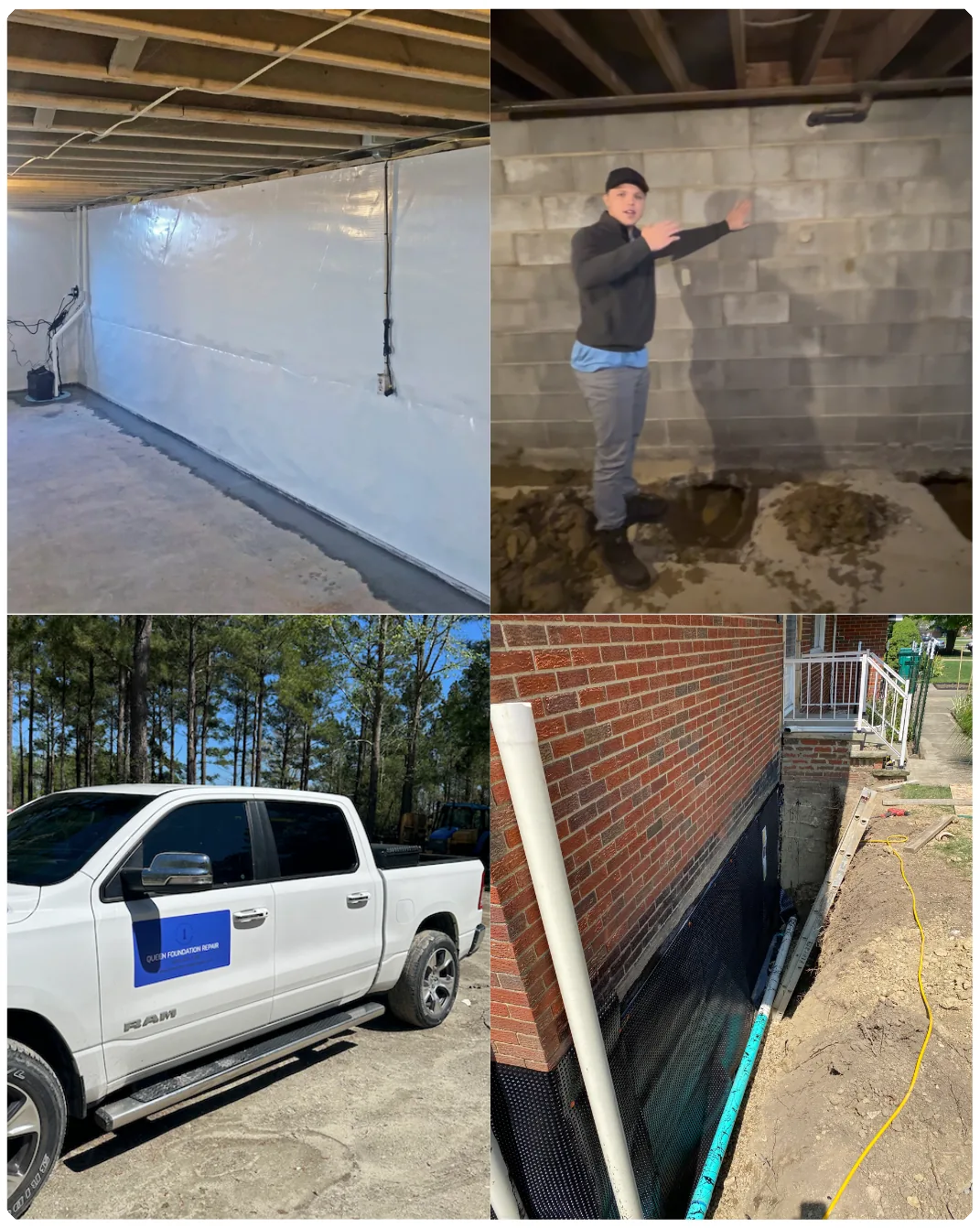
WHAT YOU GET
We answer fast and get out to the property quickly, so you're not waiting weeks just to learn what's wrong and what it'll cost.
No charge for us to come out, find what's going on, and lay out what the fix involves. You know where you stand before spending a dollar.
Licensed, with full liability and workers' comp coverage, so the work meets code and your property is protected if anything goes wrong.
The repair carries a written warranty that transfers to the next owner, so it protects your home's value if you ever sell.
A clear, written price before anything starts, no vague ballpark and no extras appearing once the crew is already on site.
Most Sarasota homes sit on a slab over sand that shifts when water moves through it. We are under these houses daily, from Arlington Park to Hudson Bayou.


COMMON QUESTIONS
These are the questions Sarasota homeowners ask us. What the work costs depends on how far the ground has moved and how much of it needs doing. Whether you are in Arlington Park or Cherokee Park, we have you covered.
What It Costs Here
Most Florida jobs land between $2,000 and $12,000. Sealing a crack from the inside is the bottom end and often comes in under $1,000. Piers under a settled corner are a few thousand each, and how many you need depends on how much of the house has moved. A whole-house job can pass $25,000, but that is not the typical call. We measure the movement before quoting anything, and the price goes to you in writing before a crew is booked.
Slab work in Sarasota commonly runs $5,000 to $15,000. Lifting a slab back over voids with foam sits at the lower end. Driving piers under it and transferring the weight sits at the top. The spread comes from how much of the slab lost support, not from the size of the house.
When the movement is ongoing, yes, because what it damages upstairs costs more than the repair and it shows up on every future inspection. When it is a crack that has not changed in years, no. Telling those two apart is most of what the free visit is for.
Slab Cracks
Wider than a coin is worth attention. So is any crack that runs sideways rather than up and down, anything longer than it was last year, and anything letting damp through. A thin line in a poured slab is usually the concrete shrinking as it cured.
Yes, and on a slab that is normally where it is done. Resin is injected through ports along the crack until it fills the full thickness of the concrete rather than just the face. The reason to work from outside instead is when the problem is water pressure or grade against the wall, which is a drainage job rather than a crack job, and sealing the crack alone would just move the problem along the wall.
The ones that are moving or letting water through, yes. Water in a crack widens it and rusts anything steel inside. A hairline that has sat unchanged for years is doing nothing and does not need sealing just because it is visible.
Insurance
Usually not. Standard Florida policies exclude settlement, earth movement and gradual water intrusion, which covers most of what we see. What is covered is sudden accidental discharge, so a slab leak that washed the ground out underneath is often a claim even though the settling itself would not be. Check your declarations page rather than guessing.
Partly, and the distinction matters. Every Florida policy must include catastrophic ground cover collapse, but that is narrow: it needs an abrupt collapse, a visible depression, structural damage and the building condemned. The broader sinkhole coverage that pays for settlement and cracking is an optional endorsement with its own deductible, and most people do not have it.
Almost always yes. The work happens outside or under the floor, and crews clear out each evening. Where a slab is being lifted you stay off that section while it cures, which is usually a matter of hours rather than days.
Sinkholes, Honestly
Pasco, Hernando and Hillsborough, north of Tampa. That is the real sinkhole belt. Sarasota County is on the prone side of the state but well outside it, which is why a dropping slab here is far more often a washout or old fill settling.
Genuine sinkhole remediation runs $10,000 to $50,000 and up, because it means grouting voids at depth until the ground stops taking material. That figure is exactly why it is worth finding out whether that is really what you have before anybody starts. Most of the time it is not.
Not if it is a real one. Filling the hole at the surface does nothing about the void underneath, and it reopens. What works is grout injected down into the voids themselves, working outward until the ground stops accepting it.
Drainage and French Drains
Figure $10 to $25 per linear foot installed. Sarasota sits at the upper half of that because sand and a high water table mean the pipe has to go deeper to sit below the level the water is actually moving at. A short run to fix one bad corner is a few hundred dollars. A full perimeter on a large lot can reach several thousand, and where the line has to cross a driveway it costs more again.
It has to go somewhere. If the outlet ends in ground that is already saturated the drain does nothing, and that is the most common reason one fails. It also means opening a trench across the yard, and it handles groundwater only, not damp coming off a crawl space floor.
Around $1,000 to $2,500 in this area, depending on depth, what the trench has to go around, and where the water can be discharged to. Irrigation lines, tree roots and a driveway crossing all push it up, and so does having nowhere obvious to send the water once it is collected.
Crawl Spaces and Seawalls
A properly installed reinforced liner lasts fifteen to twenty years. The dehumidifier is what wears out first, usually somewhere around eight to ten. Neither one is fit and forget. Both want looking at every couple of years, and the liner wants checking after anybody has been working under there.
Cost up front, and it is not a structural repair. A sealed crawl space with a sagging floor still has a sagging floor. It also needs a dehumidifier running to work properly, so there is a small ongoing electricity cost, and sealing over standing water traps it rather than solving it.
Sealing joints and filling the voids behind a wall that is otherwise sound runs a few thousand dollars. Tiebacks to pull a leaning wall back cost more. Full replacement is the expensive end at roughly $500 to $1,200 per linear foot, which is why catching a washout early is worth so much here.
WHERE WE WORK
We serve the entire Sarasota metro, not just the city limits, working the older slab houses in toward the bayou the same as the newer builds out east and on into Manatee County. It is the same sand under all of it. We come out to any of it at no charge.
ZIP CODES WE COVER
Ready to Get Started?
No obligation, fast and easy.
We appreciate you reaching out.
One of our team members will be with you shortly.


